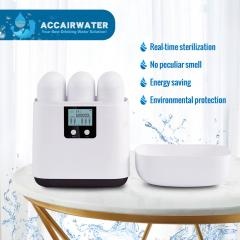
For decades, bottled water has been one of the simplest ways for businesses to provide drinking water.
Order it. Store it. Deliver it. Replace it.
But as companies pay more attention to sustainability, operating costs, supply-chain resilience, and ESG goals, an important question is emerging:
Does every business really need to keep buying drinking water?
For some applications, the answer may increasingly be no.
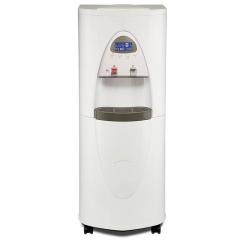
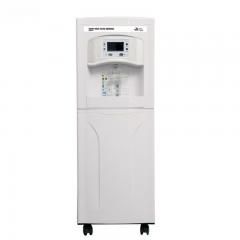
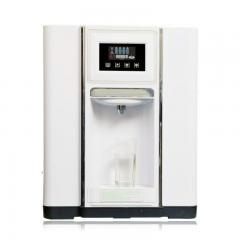
Atmospheric Water Generators (AWGs) offer an alternative approach: producing water directly from atmospheric moisture at the point of use.
Bottled Water Depends on a Supply Chain
Bottled water is not simply “water in a bottle.”
Behind every bottle is a supply chain involving:
Water source → bottling → packaging → transportation → storage → delivery → disposal
For offices, hotels, factories, and other high-consumption businesses, this process is repeated continuously.
An air water generator changes the model.
Instead of continuously purchasing and transporting packaged water, businesses can generate water onsite when suitable environmental conditions are available.
This creates a shift from water delivery to water production.
What Makes AWG Interesting for Businesses?
The main attraction is not simply sustainability.
For many organizations, the bigger value is water independence.
An AWG can potentially help businesses reduce dependence on:
Bottled-water deliveries
External water suppliers
Storage space
Plastic packaging
Water transportation
Supply-chain interruptions
This can be particularly valuable for businesses operating in remote areas or locations where water delivery is expensive or unreliable.
The U.S. EPA has also identified AWG technology as a potential option for water shortages, infrastructure disruptions, and emergency water supply.
Is an Air Water Generator Cheaper Than Bottled Water?
This is one of the most common questions — and there is no universal answer.
An AWG requires an upfront investment, electricity, filters, and regular maintenance.
Bottled water, on the other hand, has a recurring purchase and delivery cost.
Therefore, the economic advantage depends on several factors:
Daily water consumption
Local electricity prices
Bottled-water costs
Climate conditions
AWG production capacity
Maintenance costs
Equipment lifetime
For a business with relatively high and consistent water consumption, the long-term economics can become more attractive because the organization is investing in an onsite water-generation system rather than repeatedly purchasing packaged water.
The right comparison is therefore not simply:
“AWG vs. one bottle of water.”
It is:
“Onsite water generation vs. years of recurring water procurement.”
Sustainability Beyond the Plastic Bottle
One of the most obvious advantages of reducing bottled water consumption is less packaging.
But the sustainability discussion can go further.
A bottled-water supply chain involves transportation, packaging materials, storage, and waste management.
An onsite air water generator can reduce the need for some of these steps by producing water directly where it is consumed.
For businesses working toward environmental targets, this makes AWG particularly interesting as part of a broader sustainability strategy.
However, AWG should not automatically be described as “zero impact.”
Electricity consumption matters.
The environmental performance of an AWG depends on factors such as climate, system efficiency, electricity sources, and operating conditions.
This is why the next generation of AWG development is increasingly focused on energy efficiency, renewable-energy integration, and intelligent control.
Where Can Businesses Use Air Water Generators?
AWG technology can be considered for many commercial environments.
Offices
Instead of relying entirely on bottled-water deliveries, offices can use an onsite water-generation system for employees and visitors.
Hotels and Resorts
Hospitality businesses have continuous drinking-water demand. AWGs may provide an additional decentralized water source for suitable applications.
Factories
Manufacturing facilities often have large workforces and require reliable access to drinking water.
Remote Projects
Construction sites, remote facilities, and temporary operations may benefit from reducing dependence on regular water deliveries.
Schools and Institutions
Schools, campuses, and public facilities can consider AWG systems as part of decentralized drinking-water infrastructure.
The Real Question: Is Your Location Suitable for AWG?
An atmospheric water generator is not a universal replacement for every water source.
Before selecting an AWG, businesses should evaluate:
1. Climate
What are the typical temperature and relative humidity levels?
2. Water demand
How many liters of water are required per day?
3. Energy availability
What electricity supply is available, and can renewable energy be integrated?
4. Water-quality requirements
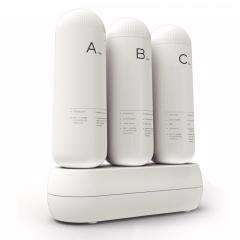
What filtration, purification, and monitoring system is required for the intended application?
5. Operating environment
Will the machine operate indoors, outdoors, in a factory, hotel, office, or remote location?
These factors are essential because AWG performance can vary significantly according to climate and system design.
From Water Delivery to Water Infrastructure
The biggest change may be conceptual.
Traditional bottled water treats drinking water as a product that must be purchased and delivered.
Atmospheric water generation treats water as something that can potentially be produced onsite.
That makes AWG part of a larger movement toward decentralized infrastructure.
As technology improves, atmospheric water generation could increasingly work alongside solar power, smart controls, energy management systems, and other distributed technologies.
For businesses, this means the question is no longer simply:
“How much does our drinking water cost?”
It becomes:
“How can we make our water supply more resilient, sustainable, and independent?”
Bottled water will continue to have an important role in many situations.
But for businesses with suitable climate conditions and consistent water demand, an water from air generator can offer a fundamentally different approach to drinking-water supply.
It combines onsite production, reduced dependence on water delivery, and the potential to support broader sustainability goals.
The future of commercial water may not be about delivering more water. It may be about producing water closer to where people need it.



 خدمة الإنترنت
 sale@accairwater.com
 +86 18559227773
 العربية
  English
 français
 Deutsch
 русский
 español
 português
 Melayu
 ไทย
ไทย Filipino